

THIS ARTICLE IS POWERED BY


B Swaminathan
The annual global tech spectacle, GITEX Global 2025, has once again opened its doors in Dubai, instantly becoming a nexus for the world’s most crucial technological dialogue. This year, amid the dazzling showcases of smart cities and cutting-edge robotics, a singular theme is resonating with unprecedented intensity: Artificial Intelligence (AI) is not just a trend, but the undeniable future. This conviction is powerfully echoed by companies and delegations from a range of nations, particularly the so-called “Advancing Countries” like Cyprus, Jordan, and Morocco. These nations are at the forefront of a global consensus, recognizing AI as the central engine for economic development and organizational transformation. Their unified message at GITEX underscores a pivotal shift: organizations worldwide are moving AI from a hypothetical concept to the absolute forefront of their strategic operations, marking a defining moment in the global digital landscape. This article explores how these key regions are championing the AI revolution and what their aggressive adoption strategies mean for the global tech economy.
Here are some of the views which were shared by some of the fast-growing companies who had exhibited their products and solutions in Gitex Global 2025 in Dubai.
Alex Stanse, GM, Nlight Media, Romania

For Romanian companies, the focus of CSOs and CEOs is on securing long-term projects that leverage the latest technologies. Critically, they prioritize quality, as Romania offers highly skilled, quality developers rather than just a large volume of personnel. Although this emphasis on quality results in a slightly higher price point, it remains the country’s main competitive advantage. Nlight Media’s participation in major global events like GITEX highlights Romania’s strategy to position itself as a source of high-caliber, long-term technological partnerships. Recognized for its commitment to quality developers over sheer volume, the firm specializes in providing custom software and IT services for national and international clients.
Lucian Palcu, Software Architect and Founder, XmartWare, Romania

Artificial Intelligence (AI) is viewed as a significant catalyst for the further development of this domain. We are actively learning from the experiences and solutions of other countries in our region, carefully assessing which technologies can be budgeted for and successfully applied within our own national context. For instance, I recently participated in the Smart City conference in Barcelona and remain eager to observe the direction this area is taking, which should allow for better predictions in a month’s time.
The primary challenge lies in budgeting the projects, as funding is persistently an issue, which is unfortunately exacerbated in the current climate. Another factor is the relatively new and unstandardized experience in this area across our region. Nevertheless, I believe that step by step, we will reach a very good position within five to ten years.
Some of the current projects where AI is playing a critical role includes installing cameras on buses that capture both traffic data and user insights. The key is then combining and analyzing this mixed data to generate more customized and actionable results.
Varun Thomas, Compliance Suite by Infocredit Group
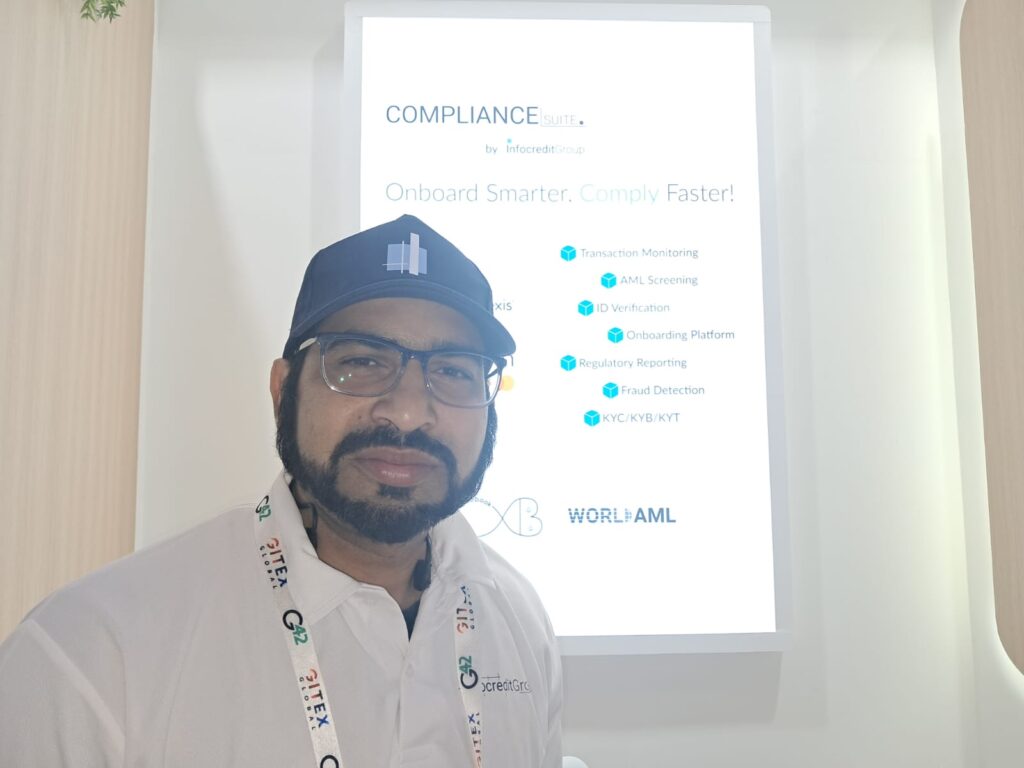
Over the last five to six years, the compliance landscape in the UAE has undergone significant changes. Many regulated industries now require strict compliance checks when onboarding a customer.
For example, a real estate company must screen any client planning to buy a property to ensure they are not on any sanctions list, negative media list, or other prohibited UAE lists. If a risk is detected, they are obligated to report it to the designated platform.
This compliance industry is poised for significant growth. Previously, these due diligence checks were mainly performed by banks and remittance providers. However, regulations have expanded to include other sectors known as Designated Non-Financial Businesses and Professions (DNFBPs), which must now implement robust compliance systems.
Beyond basic regulatory compliance, we also offer a separate segment focused on commercial risk assessment. If a supplier wants to offer a product on credit (e.g., 60, 90 days, or six months), they need to understand the client’s risk. We provide an API where the supplier can input a company name to receive a detailed report. This report covers the company’s status, location, and shareholders, along with a risk rating that advises on the appropriate credit limit and payment terms to be offered.
While the compliance environment in the UAE is sensitive and closely controlled, we offer our services globally. For instance, a company in India wishing to trade with a UAE entity can use our platform to verify if the local company is legitimate and operational, and to determine a safe credit arrangement.
Looking ahead, our main innovation is to introduce a “One API for All” service within the next six to seven months. Currently, companies often rely on separate systems for compliance, risk assessment, and ID verification. Our goal is to consolidate all these functionalities into a single, unified API. This will allow clients to perform all necessary due diligence activities through one system, eliminating delays and dependence on multiple platforms.
Chakir Ezziani, COO, IT Road Group
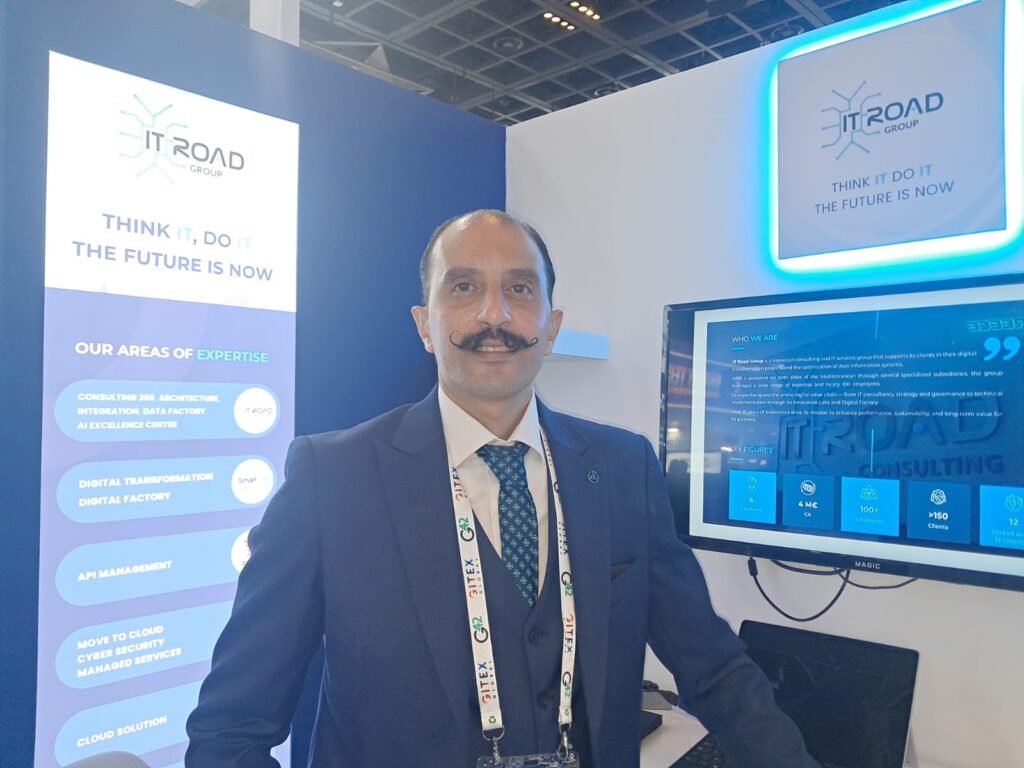
According to me, technology choices are highly dependent on several factors, starting with the client’s country and its regulatory environment. For instance, some countries have regulations that restrict the use of the public cloud, allowing only for a private cloud solution.
Technology decisions also depend on the customer’s internal culture and history. Every organization has existing systems and a history of technologies like Java, .NET, or even no-code solutions, which have become some of the most utilized tools over the last three years for implementing new systems and covering business needs.
The client’s technological maturity is another key determinant. If a company is data-driven, we focus on specific platforms for data management, transformation, and exposure. Conversely, if we are dealing with an older company with legacy systems, we must provide a structured roadmap to progressively migrate their old technologies to new ones, even while introducing new technologies immediately. Customer expectations have become very high over the last two years. While we’ve discussed digital transformation and digitalization for over a decade, many customers—even large ones—are late in transforming their core systems and digitalizing their activities.
This delay has created a major challenge: they must continue their daily operational activities and meet business needs while simultaneously migrating their crucial core systems to new technologies. In the last two to three years, my company has focused heavily on these types of projects.
The main difficulty is maintaining two parallel roadmaps:
Sustaining the business and generating revenue.
Progressively migrating and modernizing the system.
Budgeting and Investment Willingness
The budget for these projects varies greatly, ranging from small projects of €100,000 to major initiatives reaching €200 million (the latter being a budget over two or three years to completely exchange all back-end systems).
Regarding investment, clients are generally willing to spend. Many of these clients are financially robust, generate substantial business, and recognize that migration is in their best interest. For large companies, a project costing €5 million or €10 million (what I consider a “normal” project) is a negligible investment, as the resulting revenue and benefits will regenerate that investment quickly—often within three years.
Marah Bustami, Assistant Platform Coordinator, JICA Contractor

Artificial Intelligence (AI) is rapidly becoming an integral part of governance in Jordan. Our journey began in 2022 with the launch of the Jordan AI Ecosystem (JAYAS) project, a collaboration between the Japan International Cooperation Agency (JICA) and the Ministry of Digital Economy and Entrepreneurship.
The goal is to promote the adoption of AI in government services, initially through four proof-of-concept (POC) projects. This initiative is built upon the Golden Triangle model of collaboration, bringing together the public sector (government), the private sector, and academia. We consider this one of the most crucial models for AI adoption as it fosters essential cooperation between these different groups. At Gitex, we have representatives from companies that took part in our POCs. We are also joined by Al-Hussein Technical University (HTU), representing academia, which has worked with us hand-in-hand. Both are part of our dedicated Steering Committee, which includes members from all three sectors to monitor and oversee the entire project’s implementation.
AI is crucial today because the pace of development is accelerating across all fields, making AI the most adopted tool for any modern solution. We are working to integrate AI into government operations. We are simultaneously strengthening collaborations with multiple entities across the private and public sectors to firmly establish AI in Jordan.
Led by the Ministry of Digital Economy and Entrepreneurship, this strategy highlights key sectors like agriculture, energy, and smart cities. Our current POCs are directly aligned with this national vision.
On the other hand, Jordan is fortunate to have a vibrant young generation of entrepreneurs and innovators who are eager to become AI engineers. It is vital to ensure that all collaborators—the private sector, the academic sector, and the government—are included in this transformative process. Furthermore, a key focus is on working with university students to educate them about AI, ensuring they understand how to use it properly and integrate it effectively into their education and future careers.